Pitch
Correction and shifting toward selected musical notes
A real-time vocal-effects processor, synthesizer, and MIDI instrument built inside an old telephone.
The handset's original speaker is used in reverse as a deliberately lo-fi microphone. A Daisy Seed inside the phone handles the audio processing, synthesis, controls, and display.
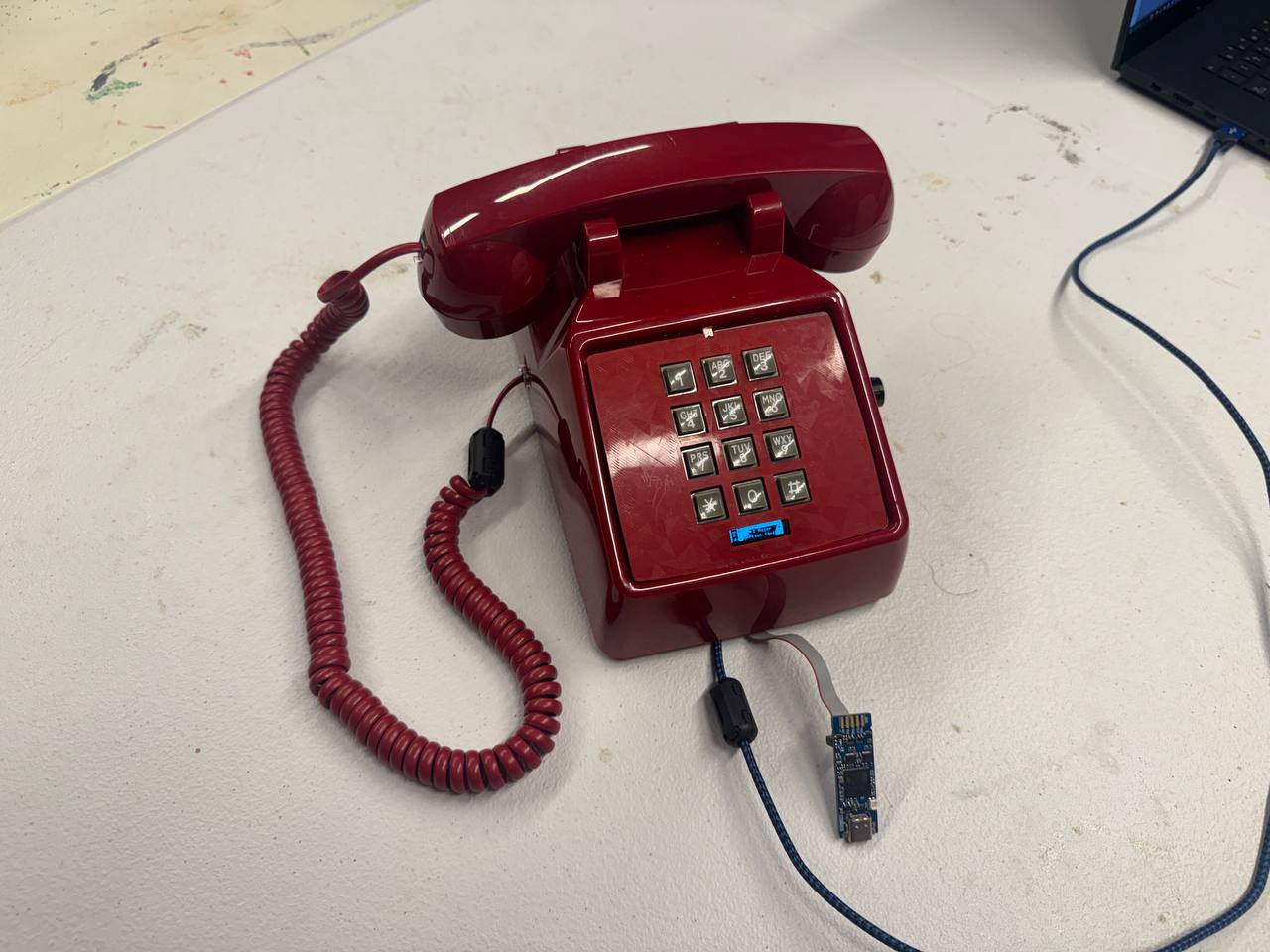
The current firmware extends beyond the version shown in the 2025 build video. It remains an experimental instrument, not a complete menu of finished promises.
Correction and shifting toward selected musical notes
Preservation and deliberate vocal-character changes
Voice-shaped synthesis from a harmonically rich carrier
Multiple MIDI-controlled target frequencies
Bit-depth and sample-rate reduction
MIDI synthesis, percussion, keypad controls, and OLED menus
Audio moves through overlapping windows so frequency-domain effects can run continuously without stopping the real-time input and output path.
Moves the detected voice toward a musical note without changing playback speed.
Preserve or alter the resonant character of the voice separately from pitch.
Applies the changing spectral shape of the voice to a synthesized carrier.
An early buffer defect produced buzzing and high-frequency artifacts. It was tolerable until vocoder development made it impossible to ignore. Following the data by hand, making the problem worse once, and then rewriting the buffer finally made the vocoder work.
See the ballerina, skater boy, and cemetery versions ↗Open Sauce forced Enoch and Nathan to stop adding features, fix the blocking failures, and turn the instrument into something people could actually try in public.
Watch the technical talk ↗Current work includes harmony, MIDI synthesis, synthesized percussion, and additional performance controls. Synthphone-E is an active prototype, not a commercial product.
Inspect the vocal DSP ↗